U.S. regulatory considerations and case studies for rare diseases
In this talk, I will present an overview of the U.S. Food and Drug Administration’s policies and practices for encouraging development of products for rare diseases and of evaluating clinical evidence for the safety and effectiveness of such products. I’ll discuss study designs that may be particularly appropriate for rare disease product development, and address some of their statistical implications. Finally, I’ll present case studies of products that were approved for rare diseases using unusual or innovative study designs and/or regulatory pathways.
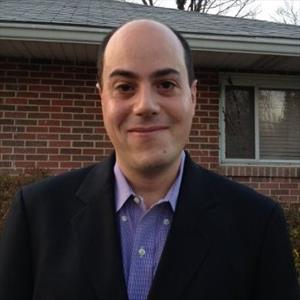
John Scott is Deputy Director of the Division of Biostatistics in the FDA's Center for Biologics Evaluation and Research, where he has also served as a statistical reviewer for blood products and for cellular, tissue and gene therapies. Prior to joining the FDA in 2008, he worked in psychiatric clinical trials at the University of Pittsburgh Medical Center and did neuroimaging research with the Neurostatistics Laboratory at McClean Hospital, Harvard Medical School. He has authored or co-authored numerous articles in areas including Bayesian and adaptive clinical trial design and analysis, drug and vaccine safety, data and text mining, and benefit-risk assessment. He holds a Ph.D. in Biostatistics from the University of Pittsburgh and an M.A. in Mathematics from Washington University in St. Louis, and is an associate editor of the journal, Pharmaceutical Statistics.
Bayesian methods for the design and interpretation of clinical trials in rare diseases
For studies in rare diseases, the sample size needed to meet a conventional frequentist power requirement can be daunting, even if patients are to be recruited over several years. Rather, the expectation of any such trial has to be limited to the generation of an improved understanding of treatment options. We propose Bayesian approaches for the conduct of rare disease trials comparing an experimental treatment with a control when the primary endpoint is binary or normally distributed. We describe processes which can be used to systematically elicit from clinicians opinions on treatment efficacy in order to establish Bayesian priors for unknown model parameters. The proposed approaches are illustrated by describing applications to two Bayesian randomised controlled trials, namely a study in childhood polyarteritis nodosa and a study in chronic recurrent multifocal osteomyelitis. Once prior distributions have been established, consideration of the extent to which opinion can be changed, even by the best feasible design, can help to determine whether a small trial is worthwhile.
Lisa Hampson is a Lecturer in Statistics at Lancaster University. Her research interests are in clinical trials, including group sequential tests and Bayesian methods for trials in rare diseases and dose-escalation. Her recent research has focused on developing methods for clinical trials of new medicines for children. She holds a PhD in Statistics from the University of Bath.
U.S. regulatory considerations and case studies for rare diseases
In this talk, I will present an overview of the U.S. Food and Drug Administration’s policies and practices for encouraging development of products for rare diseases and of evaluating clinical evidence for the safety and effectiveness of such products. I’ll discuss study designs that may be particularly appropriate for rare disease product development, and address some of their statistical implications. Finally, I’ll present case studies of products that were approved for rare diseases using unusual or innovative study designs and/or regulatory pathways.
John Scott is Deputy Director of the Division of Biostatistics in the FDA's Center for Biologics Evaluation and Research, where he has also served as a statistical reviewer for blood products and for cellular, tissue and gene therapies. Prior to joining the FDA in 2008, he worked in psychiatric clinical trials at the University of Pittsburgh Medical Center and did neuroimaging research with the Neurostatistics Laboratory at McClean Hospital, Harvard Medical School. He has authored or co-authored numerous articles in areas including Bayesian and adaptive clinical trial design and analysis, drug and vaccine safety, data and text mining, and benefit-risk assessment. He holds a Ph.D. in Biostatistics from the University of Pittsburgh and an M.A. in Mathematics from Washington University in St. Louis, and is an associate editor of the journal, Pharmaceutical Statistics.
Bayesian methods for the design and interpretation of clinical trials in rare diseases
For studies in rare diseases, the sample size needed to meet a conventional frequentist power requirement can be daunting, even if patients are to be recruited over several years. Rather, the expectation of any such trial has to be limited to the generation of an improved understanding of treatment options. We propose Bayesian approaches for the conduct of rare disease trials comparing an experimental treatment with a control when the primary endpoint is binary or normally distributed. We describe processes which can be used to systematically elicit from clinicians opinions on treatment efficacy in order to establish Bayesian priors for unknown model parameters. The proposed approaches are illustrated by describing applications to two Bayesian randomised controlled trials, namely a study in childhood polyarteritis nodosa and a study in chronic recurrent multifocal osteomyelitis. Once prior distributions have been established, consideration of the extent to which opinion can be changed, even by the best feasible design, can help to determine whether a small trial is worthwhile.
Lisa Hampson is a Lecturer in Statistics at Lancaster University. Her research interests are in clinical trials, including group sequential tests and Bayesian methods for trials in rare diseases and dose-escalation. Her recent research has focused on developing methods for clinical trials of new medicines for children. She holds a PhD in Statistics from the University of Bath.
U.S. regulatory considerations and case studies for rare diseases
In this talk, I will present an overview of the U.S. Food and Drug Administration’s policies and practices for encouraging development of products for rare diseases and of evaluating clinical evidence for the safety and effectiveness of such products. I’ll discuss study designs that may be particularly appropriate for rare disease product development, and address some of their statistical implications. Finally, I’ll present case studies of products that were approved for rare diseases using unusual or innovative study designs and/or regulatory pathways.
John Scott is Deputy Director of the Division of Biostatistics in the FDA's Center for Biologics Evaluation and Research, where he has also served as a statistical reviewer for blood products and for cellular, tissue and gene therapies. Prior to joining the FDA in 2008, he worked in psychiatric clinical trials at the University of Pittsburgh Medical Center and did neuroimaging research with the Neurostatistics Laboratory at McClean Hospital, Harvard Medical School. He has authored or co-authored numerous articles in areas including Bayesian and adaptive clinical trial design and analysis, drug and vaccine safety, data and text mining, and benefit-risk assessment. He holds a Ph.D. in Biostatistics from the University of Pittsburgh and an M.A. in Mathematics from Washington University in St. Louis, and is an associate editor of the journal, Pharmaceutical Statistics.
Bayesian methods for the design and interpretation of clinical trials in rare diseases
For studies in rare diseases, the sample size needed to meet a conventional frequentist power requirement can be daunting, even if patients are to be recruited over several years. Rather, the expectation of any such trial has to be limited to the generation of an improved understanding of treatment options. We propose Bayesian approaches for the conduct of rare disease trials comparing an experimental treatment with a control when the primary endpoint is binary or normally distributed. We describe processes which can be used to systematically elicit from clinicians opinions on treatment efficacy in order to establish Bayesian priors for unknown model parameters. The proposed approaches are illustrated by describing applications to two Bayesian randomised controlled trials, namely a study in childhood polyarteritis nodosa and a study in chronic recurrent multifocal osteomyelitis. Once prior distributions have been established, consideration of the extent to which opinion can be changed, even by the best feasible design, can help to determine whether a small trial is worthwhile.
Lisa Hampson is a Lecturer in Statistics at Lancaster University. Her research interests are in clinical trials, including group sequential tests and Bayesian methods for trials in rare diseases and dose-escalation. Her recent research has focused on developing methods for clinical trials of new medicines for children. She holds a PhD in Statistics from the University of Bath.
U.S. regulatory considerations and case studies for rare diseases
In this talk, I will present an overview of the U.S. Food and Drug Administration’s policies and practices for encouraging development of products for rare diseases and of evaluating clinical evidence for the safety and effectiveness of such products. I’ll discuss study designs that may be particularly appropriate for rare disease product development, and address some of their statistical implications. Finally, I’ll present case studies of products that were approved for rare diseases using unusual or innovative study designs and/or regulatory pathways.
John Scott is Deputy Director of the Division of Biostatistics in the FDA's Center for Biologics Evaluation and Research, where he has also served as a statistical reviewer for blood products and for cellular, tissue and gene therapies. Prior to joining the FDA in 2008, he worked in psychiatric clinical trials at the University of Pittsburgh Medical Center and did neuroimaging research with the Neurostatistics Laboratory at McClean Hospital, Harvard Medical School. He has authored or co-authored numerous articles in areas including Bayesian and adaptive clinical trial design and analysis, drug and vaccine safety, data and text mining, and benefit-risk assessment. He holds a Ph.D. in Biostatistics from the University of Pittsburgh and an M.A. in Mathematics from Washington University in St. Louis, and is an associate editor of the journal, Pharmaceutical Statistics.
Bayesian methods for the design and interpretation of clinical trials in rare diseases
For studies in rare diseases, the sample size needed to meet a conventional frequentist power requirement can be daunting, even if patients are to be recruited over several years. Rather, the expectation of any such trial has to be limited to the generation of an improved understanding of treatment options. We propose Bayesian approaches for the conduct of rare disease trials comparing an experimental treatment with a control when the primary endpoint is binary or normally distributed. We describe processes which can be used to systematically elicit from clinicians opinions on treatment efficacy in order to establish Bayesian priors for unknown model parameters. The proposed approaches are illustrated by describing applications to two Bayesian randomised controlled trials, namely a study in childhood polyarteritis nodosa and a study in chronic recurrent multifocal osteomyelitis. Once prior distributions have been established, consideration of the extent to which opinion can be changed, even by the best feasible design, can help to determine whether a small trial is worthwhile.
Lisa Hampson is a Lecturer in Statistics at Lancaster University. Her research interests are in clinical trials, including group sequential tests and Bayesian methods for trials in rare diseases and dose-escalation. Her recent research has focused on developing methods for clinical trials of new medicines for children. She holds a PhD in Statistics from the University of Bath.
U.S. regulatory considerations and case studies for rare diseases
In this talk, I will present an overview of the U.S. Food and Drug Administration’s policies and practices for encouraging development of products for rare diseases and of evaluating clinical evidence for the safety and effectiveness of such products. I’ll discuss study designs that may be particularly appropriate for rare disease product development, and address some of their statistical implications. Finally, I’ll present case studies of products that were approved for rare diseases using unusual or innovative study designs and/or regulatory pathways.
John Scott is Deputy Director of the Division of Biostatistics in the FDA's Center for Biologics Evaluation and Research, where he has also served as a statistical reviewer for blood products and for cellular, tissue and gene therapies. Prior to joining the FDA in 2008, he worked in psychiatric clinical trials at the University of Pittsburgh Medical Center and did neuroimaging research with the Neurostatistics Laboratory at McClean Hospital, Harvard Medical School. He has authored or co-authored numerous articles in areas including Bayesian and adaptive clinical trial design and analysis, drug and vaccine safety, data and text mining, and benefit-risk assessment. He holds a Ph.D. in Biostatistics from the University of Pittsburgh and an M.A. in Mathematics from Washington University in St. Louis, and is an associate editor of the journal, Pharmaceutical Statistics.
Bayesian methods for the design and interpretation of clinical trials in rare diseases
For studies in rare diseases, the sample size needed to meet a conventional frequentist power requirement can be daunting, even if patients are to be recruited over several years. Rather, the expectation of any such trial has to be limited to the generation of an improved understanding of treatment options. We propose Bayesian approaches for the conduct of rare disease trials comparing an experimental treatment with a control when the primary endpoint is binary or normally distributed. We describe processes which can be used to systematically elicit from clinicians opinions on treatment efficacy in order to establish Bayesian priors for unknown model parameters. The proposed approaches are illustrated by describing applications to two Bayesian randomised controlled trials, namely a study in childhood polyarteritis nodosa and a study in chronic recurrent multifocal osteomyelitis. Once prior distributions have been established, consideration of the extent to which opinion can be changed, even by the best feasible design, can help to determine whether a small trial is worthwhile.
Lisa Hampson is a Lecturer in Statistics at Lancaster University. Her research interests are in clinical trials, including group sequential tests and Bayesian methods for trials in rare diseases and dose-escalation. Her recent research has focused on developing methods for clinical trials of new medicines for children. She holds a PhD in Statistics from the University of Bath.
U.S. regulatory considerations and case studies for rare diseases
In this talk, I will present an overview of the U.S. Food and Drug Administration’s policies and practices for encouraging development of products for rare diseases and of evaluating clinical evidence for the safety and effectiveness of such products. I’ll discuss study designs that may be particularly appropriate for rare disease product development, and address some of their statistical implications. Finally, I’ll present case studies of products that were approved for rare diseases using unusual or innovative study designs and/or regulatory pathways.
John Scott is Deputy Director of the Division of Biostatistics in the FDA's Center for Biologics Evaluation and Research, where he has also served as a statistical reviewer for blood products and for cellular, tissue and gene therapies. Prior to joining the FDA in 2008, he worked in psychiatric clinical trials at the University of Pittsburgh Medical Center and did neuroimaging research with the Neurostatistics Laboratory at McClean Hospital, Harvard Medical School. He has authored or co-authored numerous articles in areas including Bayesian and adaptive clinical trial design and analysis, drug and vaccine safety, data and text mining, and benefit-risk assessment. He holds a Ph.D. in Biostatistics from the University of Pittsburgh and an M.A. in Mathematics from Washington University in St. Louis, and is an associate editor of the journal, Pharmaceutical Statistics.
Bayesian methods for the design and interpretation of clinical trials in rare diseases
For studies in rare diseases, the sample size needed to meet a conventional frequentist power requirement can be daunting, even if patients are to be recruited over several years. Rather, the expectation of any such trial has to be limited to the generation of an improved understanding of treatment options. We propose Bayesian approaches for the conduct of rare disease trials comparing an experimental treatment with a control when the primary endpoint is binary or normally distributed. We describe processes which can be used to systematically elicit from clinicians opinions on treatment efficacy in order to establish Bayesian priors for unknown model parameters. The proposed approaches are illustrated by describing applications to two Bayesian randomised controlled trials, namely a study in childhood polyarteritis nodosa and a study in chronic recurrent multifocal osteomyelitis. Once prior distributions have been established, consideration of the extent to which opinion can be changed, even by the best feasible design, can help to determine whether a small trial is worthwhile.
Lisa Hampson is a Lecturer in Statistics at Lancaster University. Her research interests are in clinical trials, including group sequential tests and Bayesian methods for trials in rare diseases and dose-escalation. Her recent research has focused on developing methods for clinical trials of new medicines for children. She holds a PhD in Statistics from the University of Bath.
PSI Book Club: Change: How organisations achieve hard-to-imagine results in uncertain and volatile times
Organizations have to adapt to the transforming landscape of our industry to ensure they continue to be successful in the future. Many of us are feeling the impact of organizational change. By reading John P Kotter’s book we can understand about organizational change and learn how to thrive, rather than just survive, through change.
Change, by John P Kotter (and his team), is a summary of all that he has learned over his decades of research and leading change. His book describes why many current approaches to change are inadequate and explains why new solutions need to give people a voice and a role in a new, change-embracing organization.
Develop your understanding of organisational change and become empowered to be part of your organisation’s change, by reading Change by John P Kotter and joining the Sept-Dec 2025 book club. You will be invited to join facilitated discussions of the concepts and ideas and apply knowledge from the book in-between sessions.
PSI Careers - MEDMathS: Medicine Empowered by Data, Maths and Statistics
Date: Wednesday 4th November 2026
A careers talk about medical statistics and how it plays a crucial role in developing new medicines. Learn about the field of medical statistics and how it plays a crucial role in developing groundbreaking new medicines, vaccines and healthcare products.
Joint PSI/EFSPI, PHUSE, ASA Safety Working Group Webinar Series: Scientific Evaluation of Safety Data: A Learning and Decision-Making Approach
The webinar will explore how different clinical safety questions can be translated into appropriate estimands and aligned with corresponding estimators.
Joint PSI/EFSPI Visualisation SIG 'Wonderful Wednesday' Webinars
Our monthly webinar explores examples of innovative data visualisations relevant to our day to day work. Each month a new dataset is provided from a clinical trial or other relevant example, and participants are invited to submit a graphic that communicates interesting and relevant characteristics of the data.
Date: 18 November 2026
This is an excellent opportunity for students to find out more about the field of medical statistics, talk to people from different organisations and make contacts for the future. All students currently studying for a mathematics or statistics-related BSc, MSc or PhD are invited to attend, and we welcome interest from exhibitors too.
Our monthly webinar series allows attendees to gain practical knowledge and skills in open-source coding and tools, with a focus on applications in the pharmaceutical industry.
Aligning Estimation with the Clinical Question of Interest
This webinar will focus on aligning estimation to estimands. How do different strategies for handling intercurrent events and missing data handling influence the choice of estimation method, with illustration using a case study.
This networking event is aimed at statisticians that are new to the pharmaceutical industry who wish to meet colleagues from different companies and backgrounds.
PSI Careers Coaching Series: Peer Support Initiative
This 10-month peer support programme is aimed at professionals with five or more years of experience who are seeking structured development and connection with peers at a similar career stage. Through 5 bi-monthly topics, participants will engage in coach-led presentations, small-group discussions, and regular progress reviews focused on achieving tangible outcomes.
What if your placement year meant more than observing from the sidelines? Join Novartis and spend 12 months working hands-on with real clinical trial and healthcare data, helping to advance medicines that could improve patients' lives.
Viatris is a global healthcare company uniquely positioned to bridge the traditional divide between generics and brands, combining the best of both to more holistically address healthcare needs globally.
Viatris is a global healthcare company uniquely positioned to bridge the traditional divide between generics and brands, combining the best of both to more holistically address healthcare needs globally.