
Pre-conference Courses

Registration

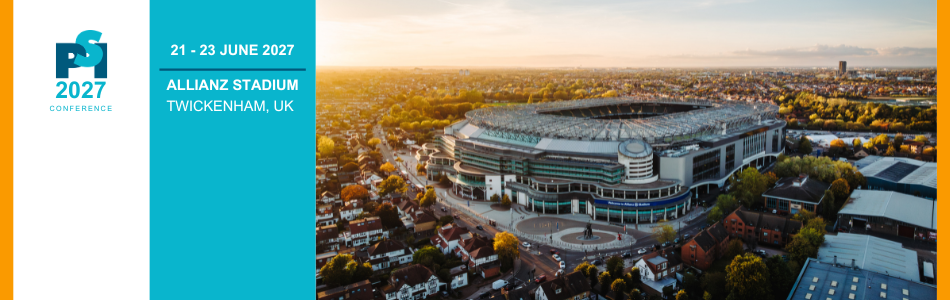
PSI are pleased to announce that the count down to the PSI Conference 2027 has now begun! The Conference will be held at the Allianz Stadium from 21st - 23rd June 2027.

Pre-conference courses will take place on Sunday 20th June from 1pm - 5pm at the Allianz Stadium. The details of each course are below: 

Pre-Conference Course 1

Data Monitoring Committees (DMC)

A Data Monitoring Committee (DMC) is an independent group that reviews interim trial data to safeguard participants and trial integrity and to recommend continuation, modification, or stopping to the legal sponsor. This short course addresses both the statistical and operational aspects.
We begin by outlining aspects of clinical trial monitoring with a focus on DMCs as the committee responsible for reviewing unblinded safety and efficacy data while the trial is ongoing. Topics include the purpose and composition of a DMC, when DMCs are (not) needed, principles of membership (e.g., independence, confidentiality), and practicalities such as meeting structure. We then introduce the DMC charter as the documenting governing the DMC. This session closes with a focus on statistical methods of monitoring clinical trials (for example, sequential methods) and the analysis of safety data. 

In the second session clear communication in DMC reports covering how to structure tables, listings, and figures, and how to use effective visual summaries is discussed. Best practices are applied in a case study through an interactive group exercise. Further interactive exercises illustrate open‑session dynamics and practical communication between sponsors, DMC members, and contract research organizations supporting the DMC as independent statistical analysis centre. 

The course is taught by presenters with substantial DMC experience in industry and academia and is designed to equip statisticians with knowledge and tools they can apply in day‑to‑day DMC work. 

Speakers

Tim Friede, University Medical Center Göttingen

David Lawrence, Novartis Pharma AG

Tobias Mütze, Novartis Pharma AG

Pre-Conference Course 2

Design, Simulate, Refine: A Hands-On Short Course in Simulation-Guided Clinical Trial Design

Modern clinical trials increasingly rely on adaptive designs, master protocols, biomarker-guided enrolment and complex operational features. These approaches can answer research questions more efficiently and more ethically, but they also introduce complexity that is more difficult to communicate and, in many cases, impossible to evaluate at all without simulation. Recent regulatory guidance reflects this shift: the FDA's Adaptive Designs and Complex Innovative Trial Design guidances, the joint EC/EMA/CTCG Complex Clinical Trials Q&A, and the draft ICH E20 guideline all position simulation as a primary means of quantifying operating characteristics, demonstrating error rate control, and justifying design features. Practical guidance on how to plan, conduct, report and interpret a credible simulation study nevertheless remains scarce, and many development teams still learn by trial and error.

Furthermore, simulations can be more useful than just being a means to derive operating characteristics that cannot be calculated analytically. Examining individual simulated trials alongside these summaries provides insight into how the design will perform in practice, allowing potential risks to be anticipated and the design refined. 

This four-hour course addresses both: why to simulate, and how to simulate well. The first half introduces key concepts and terminology, good simulation practice, and makes the case for simulation from the perspective of each stakeholder involved in a trial: clinical development teams, data monitoring committees, regulators, ethics committees, funders and patient representatives. We discuss the choice of benchmark designs, sensitivity analyses, Monte Carlo error and the number of replications, the risk of unintentionally biased design comparisons, and how to structure a simulation report suitable for appending to a trial protocol or supporting a regulatory interaction. The remaining half of the course is devoted to two to three practical case studies in which participants work through the design–simulate–refine cycle themselves: starting from a simple straw-man design, inspecting individual simulated trials before aggregating operating characteristics, adding complexity where the simulations justify it, and summarising results. Case studies will be conducted using software that is either open-source or will be freely available to short course participants; installation instructions and course materials will be circulated in advance.

Speakers

Elias Laurin Meyer, Berry Consultants

Alun Bedding, Alun Bedding Coaching & Consulting

Pre-Conference Course 3

What Every Statistician Needs to Know About Real-World Evidence: Becoming a Better Consumer, Commissioner and Collaborator

Real-world evidence (RWE) increasingly informs regulatory, reimbursement, and clinical decision-making. However, many statisticians are trained primarily in randomized clinical trials and have limited exposure to the opportunities, limitations, and methodological considerations associated with real-world data (RWD). This interactive course is designed to help statisticians become more informed consumers, commissioners, collaborators, and advocates of RWE.

The course focuses on the following topics. First, how can we determine whether a real-world data source is fit for purpose for a particular research question? Second, how can comparative effectiveness questions be addressed using modern causal inference approaches such as target trial emulation? Third, when can RWD be used alongside clinical trials through external control arms or hybrid study designs, and what challenges arise when defining patients, treatments, and outcomes using real-world proxies?

Through a combination of concise lectures, case studies, and small-group exercises, participants will gain a practical understanding of the strengths and limitations of RWD, learn how to critically appraise common RWE study designs, and develop the confidence to engage effectively with multidisciplinary teams delivering RWE. Attendees will leave with practical frameworks, worked examples, and checklists that can be applied immediately when reviewing, commissioning, or collaborating on RWE studies.

Speakers

Rima Izem, Novartis

Sandra Chai-Rees, GSK

Eleanor Ralphs, IQVIA

Upcoming Events

Latest Jobs