Date: Tuesday 12th September 2023 Time: 12:00-13:00 BST | 13:00-14:oo CEST Location: Online Speakers: Kleio Kipourou (GSK), Andy Nicholls (GSK), and Tom Fisher (UCB).
Who is this event intended for? Anyone who is interested in learning more about AI advances and its potential uses in the pharma industry and the associated challenges. There are no expectations or requirements on the previous experience on using ChatGPT or AI for this session. What is the benefit of attending? This session will cover the incredible advances in AI and how they are going to shape the future of medical statistics within the pharmaceutical industry. It will raise awareness of opportunities, challenges and changes that lie ahead for the roles of programmers and statisticians.
Registration
Registration for this webinar is free for both Members of PSI and Non-Members.
To register for this event, please click here.
Overview
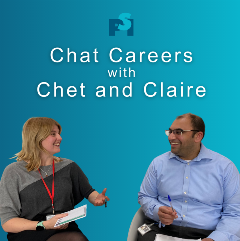
This PSI Lunch & Learn series focuses on career-related topics through a panel discussion, hosted by Claire Brittain & Chetan Mistry.
Upcoming session:- In the upcoming event – “ChatGPT & Beyond” – we will be discussing the advances of AI and its applications to medical statistics and programming within the pharmaceutical industry.
We asked ChatGPT to briefly describe the benefits and challenges of ChatGPT and AI in the context of careers for Statisticians and Programmers working in the healthcare industry. Here’s what it came out with….
ChatGPT output: Benefits of ChatGPT and AI for Statisticians and Programmers in healthcare include efficient data analysis, predictive modelling, and automation, leading to optimized patient outcomes and personalized medicine. AI can process vast amounts of data, uncover valuable insights, and enhance decision-making.
Challenges involve ensuring data quality and privacy protection due to the sensitive nature of healthcare data. Interpretable AI models are crucial for transparent decision-making. Regulatory compliance can be complex, and integrating AI into existing systems may face obstacles. Addressing bias and fairness concerns is vital to prevent disparities in patient care. Upskilling in data science and AI is necessary for successful implementation in the healthcare industry. Careful consideration of these challenges is essential to fully harness AI's potential benefits.
Did ChatGPT meet your expectations? Could we have prompted more effectively? Was ChatGPT even the best tool? Come to our panel session and hear the discussion from our deepfake experts.
Speaker details
Speaker
Biography
Kleio Kipourou
Kleio is a pharmacist and biostatistician/data scientist with an extensive background in both academia and the pharmaceutical industry. Currently, she is working for GSK focusing on large scale projects that have complex challenges and require analytical solutions. Prior to her role at GSK, Kleio worked for AstraZeneca, where she successfully delivered a fully automated predictive tool for over 90 active clinical trials. This innovative tool not only ensured patient safety but also maximized trial success and significantly reduced cycle times.
In addition, Kleio's commitment to promoting patient diversity and addressing the impact of socioeconomic inequalities on health outcomes led her to engage in extensive research under the sponsorship of Cancer Research UK. During this time, she developed novel methods that quantify individuals risks as well as differences in cancer survival. Through her contributions, Kleio has played an essential role in advancing our understanding of these disparities and their implications for cancer patients.
Presently, Kleio is leading an exciting initiative at GSK that emphasizes the ethical use of statistical models and AI. This initiative not only raises awareness but also provides essential recommendations to ensure the responsible and ethical implementation of cutting-edge technologies in pharma.
Andy Nicholls
Andy Nicholls has been a Data Scientist for as long as people started calling themselves Data Scientists. He currently serves as the Head of Data Science at GSK Biostatistics' Statistics and Data Science Innovation Hub. In this role, he leads a team dedicated to developing data science capabilities within Biostatistics and providing innovative Data Science solutions for R&D business partners in areas such as Clinical Operations, Resource Management, HR, and Finance.
Before re-joining GSK in 2017, Andy held the position of Head of Data Science Consultancy at Mango Solutions, a specialised data science consultancy with a focus on the R programming language. During his tenure at Mango, he supervised various consultancy projects across multiple sectors, delivered technical training, and implemented a wide range of technical solutions, from simple analytics to extensive IoT projects.
Andy's professional background also includes experience as a clinical trial statistician at GSK. He holds an MMath in Mathematics from the University of Bath and an MSc in Statistics with Applications in Medicine from the University of Southampton.
Tom Fisher
Tom is a machine learning researcher at UCB, where he one of his roles involves working as part of a team exploring the utilisation of large language models (LLMs) within the company.
After studying maths at Cambridge, he pursued an MSc in Machine Learning from UCL, where he published a paper on gender bias in LLMs.
During his time as a research associate at Oxford, he focused on applying machine learning techniques to remote sensing in international development before shifting his focus to electronic health records. This involved investigating the potential of BERT-like models to enhance cardiovascular disease risk prediction.
PSI Book Club: Change: How organisations achieve hard-to-imagine results in uncertain and volatile times
Organizations have to adapt to the transforming landscape of our industry to ensure they continue to be successful in the future. Many of us are feeling the impact of organizational change. By reading John P Kotter’s book we can understand about organizational change and learn how to thrive, rather than just survive, through change.
Change, by John P Kotter (and his team), is a summary of all that he has learned over his decades of research and leading change. His book describes why many current approaches to change are inadequate and explains why new solutions need to give people a voice and a role in a new, change-embracing organization.
Develop your understanding of organisational change and become empowered to be part of your organisation’s change, by reading Change by John P Kotter and joining the Sept-Dec 2025 book club. You will be invited to join facilitated discussions of the concepts and ideas and apply knowledge from the book in-between sessions.
PSI Careers - MEDMathS: Medicine Empowered by Data, Maths and Statistics
Date: Wednesday 4th November 2026
A careers talk about medical statistics and how it plays a crucial role in developing new medicines. Learn about the field of medical statistics and how it plays a crucial role in developing groundbreaking new medicines, vaccines and healthcare products.
Joint PSI/EFSPI, PHUSE, ASA Safety Working Group Webinar Series: Scientific Evaluation of Safety Data: A Learning and Decision-Making Approach
The webinar will explore how different clinical safety questions can be translated into appropriate estimands and aligned with corresponding estimators.
Joint PSI/EFSPI Visualisation SIG 'Wonderful Wednesday' Webinars
Our monthly webinar explores examples of innovative data visualisations relevant to our day to day work. Each month a new dataset is provided from a clinical trial or other relevant example, and participants are invited to submit a graphic that communicates interesting and relevant characteristics of the data.
Date: 18 November 2026
This is an excellent opportunity for students to find out more about the field of medical statistics, talk to people from different organisations and make contacts for the future. All students currently studying for a mathematics or statistics-related BSc, MSc or PhD are invited to attend, and we welcome interest from exhibitors too.
Our monthly webinar series allows attendees to gain practical knowledge and skills in open-source coding and tools, with a focus on applications in the pharmaceutical industry.
Aligning Estimation with the Clinical Question of Interest
This webinar will focus on aligning estimation to estimands. How do different strategies for handling intercurrent events and missing data handling influence the choice of estimation method, with illustration using a case study.
This networking event is aimed at statisticians that are new to the pharmaceutical industry who wish to meet colleagues from different companies and backgrounds.
PSI Careers Coaching Series: Peer Support Initiative
This 10-month peer support programme is aimed at professionals with five or more years of experience who are seeking structured development and connection with peers at a similar career stage. Through 5 bi-monthly topics, participants will engage in coach-led presentations, small-group discussions, and regular progress reviews focused on achieving tangible outcomes.
What if your placement year meant more than observing from the sidelines? Join Novartis and spend 12 months working hands-on with real clinical trial and healthcare data, helping to advance medicines that could improve patients' lives.
Viatris is a global healthcare company uniquely positioned to bridge the traditional divide between generics and brands, combining the best of both to more holistically address healthcare needs globally.
Viatris is a global healthcare company uniquely positioned to bridge the traditional divide between generics and brands, combining the best of both to more holistically address healthcare needs globally.